
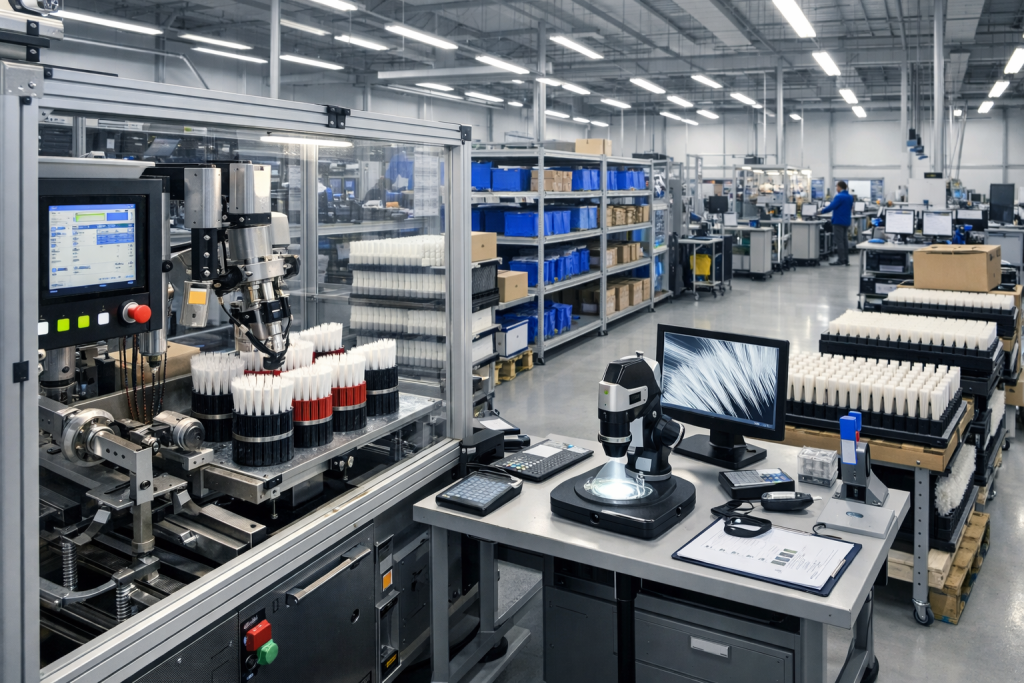
Selecting the right industrial brush supplier has become increasingly complex as manufacturing demands evolve in 2026. Whilst cost considerations remain important, procurement teams and plant engineers are discovering that the lowest price rarely translates to the best long-term value. The modern industrial landscape demands suppliers who can deliver consistent quality, sustainable solutions and reliable service alongside competitive pricing.
Today’s industrial brush supplier selection process requires a holistic evaluation approach. Manufacturing disruptions, sustainability mandates and technological advances have fundamentally changed what constitutes value in supplier relationships. Smart procurement decisions now prioritise total cost of ownership over initial purchase price, considering factors that directly impact operational efficiency and business continuity.
Quality Standards and Manufacturing Capabilities
Certification and Compliance Framework
When evaluating an industrial brush supplier, certification standards serve as the foundation for quality assurance. ISO 9001:2015 certification demonstrates systematic quality management, whilst industry-specific certifications indicate specialised expertise. Suppliers should maintain documented quality systems covering material sourcing, production processes and final inspection protocols.
Manufacturing capabilities extend beyond basic production capacity to include precision engineering and customisation abilities. Advanced suppliers utilise computer-controlled machinery for consistent filament placement and automated quality checking systems. These technological investments translate directly into product reliability and reduced field failures.
Material Selection and Testing Protocols
Superior industrial brush suppliers maintain comprehensive material testing laboratories for evaluating filament durability, chemical resistance and performance characteristics. This includes accelerated wear testing, temperature cycling, and chemical compatibility studies. Documentation of these testing protocols provides procurement teams with confidence in product specifications and expected service life.
The ability to source and process specialty materials distinguishes leading suppliers from commodity providers. Whether requiring recycled filaments for sustainability goals or exotic materials for extreme operating conditions, supplier material expertise directly impacts application success.
Lead Times and Supply Chain Reliability
Production Scheduling and Capacity Management
Reliable lead times have become a critical differentiator in industrial brush supplier selection. Suppliers with robust production planning systems can provide accurate delivery schedules and proactively communicate potential delays. This transparency enables better production planning and inventory management for manufacturing facilities.
Capacity management capabilities determine a supplier’s ability to handle urgent requirements and volume fluctuations. Leading suppliers maintain strategic inventory of common components and raw materials, enabling rapid response to customer needs without compromising quality standards.
Geographic Considerations and Logistics
Supply chain geography significantly impacts delivery reliability and total cost. Aviva Brushes illustrates how strategic location in established manufacturing hubs like Coimbatore can provide cost advantages whilst maintaining global shipping capabilities. Proximity to raw material sources and transportation infrastructure reduces lead times and logistics complexity.
Backup supply arrangements and alternative shipping routes demonstrate supplier resilience against disruptions. Suppliers with multiple production facilities or established partnerships can maintain continuity during unexpected challenges, protecting customer operations from supply interruptions.
Sustainability and Environmental Responsibility
Sustainable Material Innovation
Environmental responsibility has transitioned from optional consideration to mandatory requirement for many industrial applications. Forward-thinking suppliers invest in sustainable material development, including bio-based filaments and recycled content options. These innovations help customers meet corporate sustainability targets whilst maintaining performance standards.
Lifecycle assessment capabilities enable suppliers to quantify environmental impacts throughout product lifecycles. This data supports customers’ environmental reporting requirements and identifies opportunities for further sustainability improvements through design optimisation or material selection.
Waste Reduction and Circular Economy Principles
Sustainable manufacturing practices encompass waste reduction, energy efficiency and circular economy principles. Leading suppliers implement closed-loop manufacturing processes, material recovery programmes and renewable energy adoption. These practices not only reduce environmental impact but often translate to cost efficiencies passed on to customers.
Take-back programmes for end-of-life brushes demonstrate commitment to circular economy principles. Suppliers offering these services help customers achieve zero-waste-to-landfill goals whilst potentially reducing replacement brush costs through material recovery and reprocessing.
Technical Support and Engineering Expertise
Application Engineering and Problem-Solving
Technical expertise distinguishes commodity suppliers from true industrial partners. Comprehensive application engineering support includes performance optimisation, troubleshooting assistance and custom solution development. This support reduces customer engineering burden whilst ensuring optimal brush performance in specific applications.
Collaborative engineering approaches involve supplier engineers working directly with customer teams to identify improvement opportunities. This might include brush design modifications for extended service life, material changes for improved performance or process adjustments for enhanced efficiency.
Training and Knowledge Transfer
Professional development support through training programmes and technical documentation adds significant value to supplier relationships. Comprehensive maintenance training reduces operational costs and extends brush service life. Technical documentation packages enable customers to optimise installation procedures and maintenance schedules.
Remote support capabilities, including video consultation and diagnostic services, provide immediate technical assistance when issues arise. This responsiveness minimises production disruptions and demonstrates supplier commitment to customer success.
Innovation and Future-Readiness
Technology Integration and Smart Solutions
The industrial brush sector is experiencing technological transformation through sensor integration, predictive maintenance capabilities and IoT connectivity. Progressive suppliers invest in these technologies, offering smart brush solutions that provide real-time performance data and predictive failure indicators.
Research and development investments indicate supplier commitment to continuous improvement and innovation. Suppliers that maintain active research and development programs can offer early access to emerging technologies along with opportunities to collaborate on custom-designed solutions.
Market Adaptability and Growth Partnership
Future-ready suppliers demonstrate adaptability to changing market conditions and evolving customer requirements. This includes flexibility in manufacturing processes, willingness to invest in new capabilities and proactive communication about market trends and opportunities.
Long-term partnership potential involves suppliers who view customer relationships as strategic investments rather than transactional exchanges. These suppliers provide preferential treatment during capacity constraints, early access to new products and collaborative planning for future requirements.
Making the Right Choice
Selecting an industrial brush supplier requires balancing multiple factors beyond initial cost considerations. Quality standards, supply chain reliability, sustainability credentials, technical support and innovation capabilities collectively determine long-term value and partnership success.
Aviva Brushes demonstrates how modern suppliers can combine competitive pricing with comprehensive capabilities, from sustainable material innovations to advanced technical support services. The key lies in conducting thorough supplier evaluations that consider total cost of ownership rather than purchase price alone.
Take a fresh look at your current industrial brush supplier relationships. Reach out to our technical team to discuss your specific requirements and explore how the right partnership can enhance your operational efficiency. Visit our products page to explore innovative solutions designed for modern industrial applications, or learn more about our comprehensive approach to industrial brush manufacturing.