
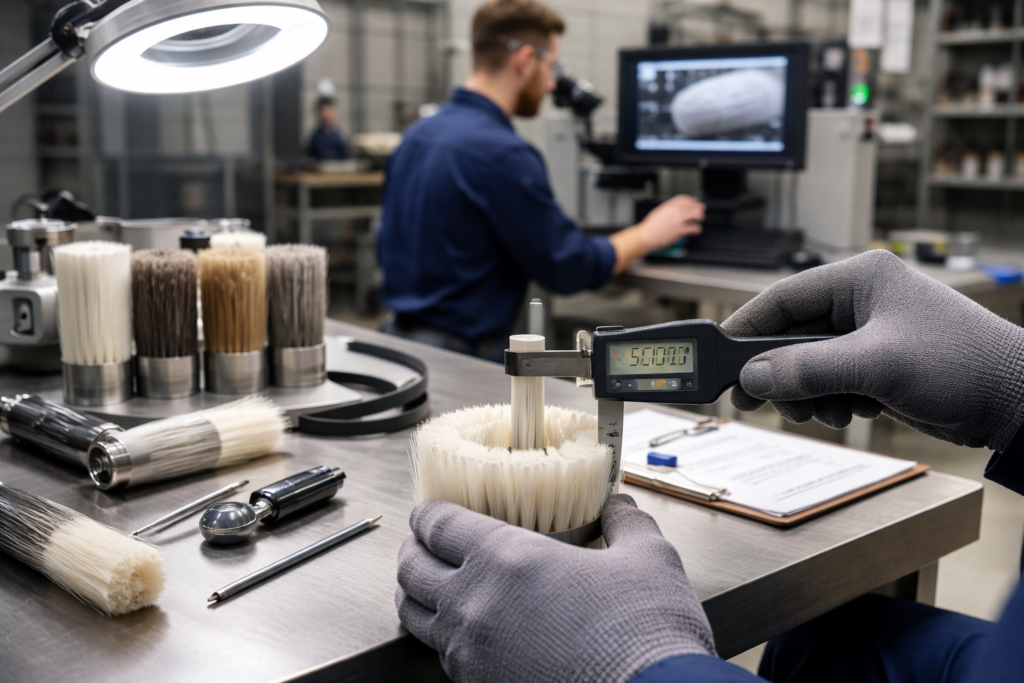
India’s manufacturing sector is steadily moving towards higher levels of precision, reliability and global integration. As factories adopt automation and advanced production systems, even small components play a decisive role in overall performance. Industrial brushes are a clear example. Though often overlooked they are critical to cleaning, finishing, deburring and surface preparation across many industries. For industrial brushes manufacturers in India, quality control has become an essential discipline rather than a back-end process.
At Aviva Brushes, quality is viewed as a continuous responsibility that begins with design and extends through material selection, production testing and delivery. This approach supports consistent performance across demanding industrial environments.
The Changing Role of Industrial Brushes in Indian Manufacturing
Industrial brushes today operate in conditions far removed from traditional manual use. They are integrated into automated lines running at high speeds and tight tolerances. In sectors such as automotive engineering, electronics, textiles, food processing and steel fabrication, even minor variations in brush performance can disrupt operations.
As Indian manufacturing aligns more closely with international standards, the expectation from components has increased. Brushes must deliver predictable results batch after batch while maintaining safety and durability. Quality control provides the structure needed to meet these expectations.
Material Selection as the First Quality Benchmark
Quality control begins with raw materials. The choice of filament wire, abrasive grain or natural fibre directly influences brush behaviour in use. Synthetic filaments must retain shape and stiffness despite exposure to moisture, chemicals and temperature changes common in Indian industrial settings. Metal wires must offer strength without excessive wear or corrosion.
At this stage quality checks focus on consistency, chemical resistance and suitability for the intended application. Selecting the right material reduces premature wear, prevents contamination and ensures reliable surface interaction. This is particularly important where brushes are used in sensitive environments, such as food processing or precision engineering.
Manufacturing Accuracy and Process Discipline
Once materials are approved manufacturing precision becomes the next priority. Uniform tufting, accurate trim length and secure fixing are essential for stable performance. Poorly anchored filaments or uneven density can lead to imbalance vibration or shedding during operation.
Quality control teams monitor each stage of production to ensure that process parameters remain within defined limits. This structured approach helps maintain repeatability, especially when producing large volumes or customised brush designs for specific machinery.
Mechanical Testing for Safety and Reliability
Industrial brushes are subject to mechanical stress particularly in rotary or continuous-use applications. Quality testing includes checks for filament retention, balance and structural integrity. These tests ensure that brushes can operate safely at intended speeds without risking equipment damage or operator injury.
For Indian industries where uptime and safety are critical, reliable testing helps reduce unexpected stoppages and maintenance costs. It also supports compliance with domestic and international safety expectations.
Digital Tools and Modern Inspection Methods
Traditional visual inspection still plays a role, but it is increasingly supported by digital inspection systems. Automated inspection improves consistency and reduces the risk of human oversight. Data gathered from inspections also supports continuous improvement by identifying trends and recurring issues.
While technology evolves, the underlying principle remains the same. Quality control must be proactive rather than reactive. Early detection of deviations protects both the manufacturer and the end user.
Meeting Standards and Regulatory Expectations
Compliance with recognised standards is essential for manufacturers serving both Indian and export markets. Quality control ensures that brushes meet relevant safety performance and durability requirements. This builds confidence among equipment manufacturers, distributors and end users.
For companies like Aviva Brushes, adherence to structured quality systems reflects a long-term commitment to responsible manufacturing rather than short-term gains.
The Business Impact of Consistent Quality
Quality failures can have far-reaching consequences. A brush that sheds filaments or wears unevenly can damage finished products, contaminate processes or halt production lines. These issues affect not only operational efficiency but also trust and reputation.
By contrast, consistent quality strengthens partnerships and supports repeat business. For Indian manufacturers seeking a strong presence in international markets, effective quality control serves as a key competitive strength.
Looking Ahead: Precision Customisation and Sustainability
Future demand is moving towards customised brush solutions designed for specific applications. This requires flexible quality systems capable of validating new designs without compromise. Sustainability is also becoming a consideration with increased focus on responsible material use and longer service life.
Quality control will remain central to managing these shifts while maintaining performance standards.
Conclusion
Industrial brush manufacturing has evolved into a precision-driven discipline where quality control underpins every stage of production. For Indian manufacturers the ability to deliver consistent reliable and safe products is closely tied to structured quality practices.
At Aviva Brushes, quality is not treated as a final inspection step but as an integrated process that supports performance safety and long-term value. In a manufacturing environment where precision defines success, effective quality control ensures that even the smallest components contribute to dependable industrial outcomes.
FAQs:
Q1. Why is quality control important in industrial brush manufacturing?
Quality control ensures that industrial brushes perform consistently under demanding conditions. It helps maintain uniformity in materials dimensions and strength which reduces the risk of equipment failure, production downtime and safety concerns in industrial environments.
Q2. How does material selection affect brush performance?
The choice of filament wire or fibre determines how a brush behaves during use. Proper quality checks confirm that materials are suitable for specific applications such as exposure to moisture, chemicals, heat or continuous mechanical stress.
Q3. What types of testing are involved in quality control?
Testing typically includes checks for filament retention, balance, durability and dimensional accuracy. These tests verify that brushes can operate safely and efficiently within the required industrial parameters.
Q4. How does quality control support long-term reliability?
By monitoring every stage of production, quality control helps identify issues early. This leads to longer brush life, stable performance and dependable results across repeated industrial use.