
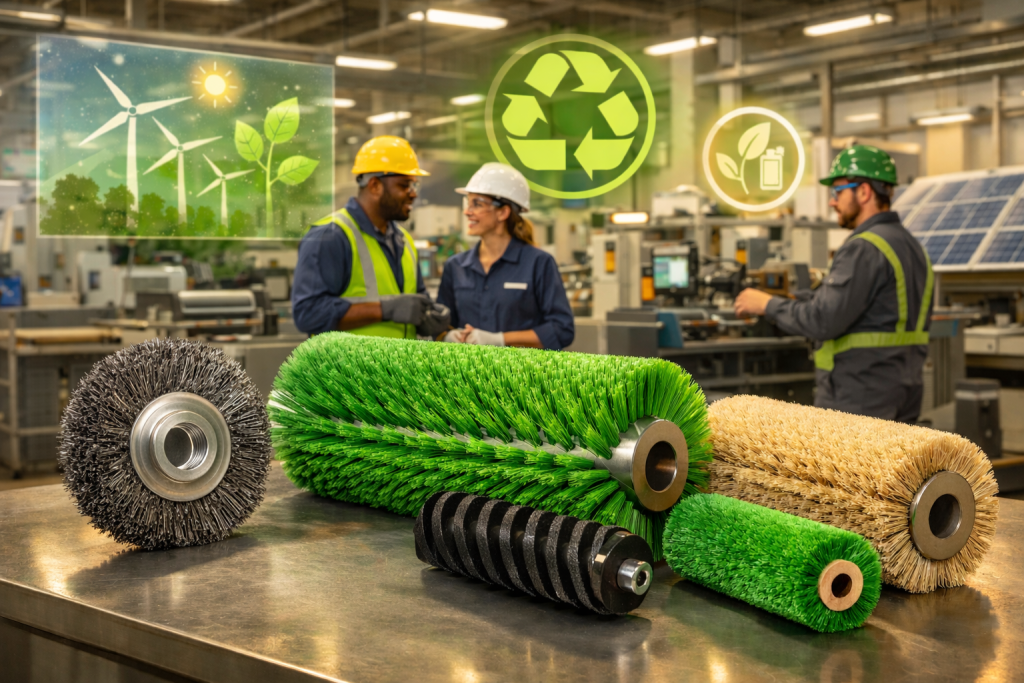
As environmental regulations tighten and procurement teams face mounting pressure to reduce carbon footprints, selecting the right industrial brush supplier has evolved beyond traditional performance metrics. With the global sustainable materials market projected to reach USD 1,183.54 billion by 2035, manufacturers must now balance operational efficiency with environmental responsibility when sourcing industrial brushes. The shift towards eco-friendly brushes isn’t just about compliance—it’s about future-proofing operations whilst maintaining the quality standards that plant engineers demand.
The Business Case for Sustainable Industrial Brushes
Rising Regulatory Pressures in Manufacturing
European regulations are driving unprecedented changes in green procurement standards, forcing manufacturers to reconsider their entire supply chain approach. Environmental compliance requirements are expanding beyond traditional waste management to encompass the full lifecycle of industrial components, including brushes. Companies that fail to adapt face increasing regulatory scrutiny and potential penalties that can significantly impact operational costs.
The regulatory landscape extends beyond Europe, with emerging markets implementing similar environmental standards. This global shift means that manufacturers must establish sustainable supply chain practices now to maintain market access across multiple regions. Biodegradable brush materials and recycled filaments are becoming standard requirements rather than optional upgrades in many sectors.
Cost-Benefit Analysis of Eco-Friendly Options
Despite initial concerns about premium pricing, consumers and B2B buyers demonstrate willingness to pay 10-30% more for sustainable tools when the long-term value proposition is clear. The durability of recycled materials often matches or exceeds traditional alternatives, providing superior cost efficiency over the product lifecycle. Risk mitigation from changing environmental compliance requirements represents another significant cost factor that procurement teams must consider.
Plant-based brush fibres and bio-based filaments offer reduced environmental impact whilst delivering comparable performance metrics. The total cost of ownership frequently favours sustainable options when factoring in disposal costs, regulatory compliance expenses and potential carbon taxation. Early adopters report improved supplier relationships and enhanced corporate reputation as additional benefits.
Understanding Eco-Friendly Filament Materials and Technologies
Recycled vs Bio-Based Materials: Performance Comparison
rPET bristles manufactured from recycled plastic bottles now match traditional performance standards whilst significantly reducing environmental impact. These recycled filaments demonstrate equivalent wear resistance and chemical compatibility, making them suitable for demanding industrial applications. The manufacturing process for rPET materials has advanced considerably, eliminating previous concerns about consistency and durability.
Bio-based filaments offer different advantages, particularly in applications where biodegradable brush materials provide end-of-life benefits. However, temperature resistance and chemical compatibility require careful evaluation for specific industrial processes. The choice between recycled and bio-based options depends heavily on application requirements and environmental priorities.
Advanced Sustainable Filament Options
Polymex represents breakthrough technology in sustainable manufacturing, offering 100% recycled polyester filaments produced through in-house recycling facilities. This closed-loop approach ensures consistent quality whilst minimising transportation-related carbon emissions. BioFil technology provides fully biodegradable alternatives for applications where disposal considerations outweigh durability requirements.
Advanced bio-polymer developments continue expanding the range of sustainable options available to manufacturers. These innovations address previous limitations in temperature resistance and chemical compatibility, making eco-friendly alternatives viable for increasingly demanding applications. Investment in research and development by leading suppliers ensures continuous improvement in material performance.
Natural Fibre Alternatives for Industrial Applications
Tampico fibres sourced from agave plants offer excellent performance characteristics for environmentally conscious operations. These natural materials provide superior flexibility and chemical resistance compared with many synthetic alternatives. Bamboo charcoal and hemp-based innovations represent emerging technologies with unique properties suitable for specific industrial applications.
Natural fibre options require careful evaluation of moisture resistance and dimensional stability in varying environmental conditions. However, their reduced environmental impact and renewable source materials make them increasingly attractive for manufacturers prioritising sustainability. The development of hybrid materials combining natural fibres with sustainable synthetic components offers promising solutions.
Evaluating Your Industrial Brush Supplier’s Sustainability Credentials
Key Questions for Supplier Assessment
Effective supplier evaluation begins with comprehensive documentation of material sourcing practices and traceability systems. Your industrial brush supplier should provide detailed information about raw material origins, recycling processes and environmental impact metrics. Manufacturing process transparency demonstrates genuine commitment to sustainable supply chain practices rather than superficial marketing claims.
Recycling programmes and end-of-life solutions reveal the supplier’s approach to circular economy principles. Leading suppliers offer take-back programmes for used brushes and demonstrate measurable environmental benefits from their operations. Carbon footprint reporting capabilities indicate sophisticated environmental management systems and commitment to continuous improvement.
Certification Standards and Compliance
Third-party sustainability certifications provide independent verification of environmental claims and manufacturing practices. ISO 14001 environmental management system certification demonstrates systematic approaches to environmental responsibility. Industry-specific certifications relevant to your sector may provide additional assurance of compliance with environmental regulations.
Environmental compliance documentation should include detailed reporting on emissions, waste management and resource utilisation. Suppliers should demonstrate proactive approaches to regulatory changes and emerging environmental requirements. Regular auditing processes and transparent reporting build confidence in long-term supplier relationships.
Supply Chain Transparency Requirements
Comprehensive supply chain transparency extends beyond immediate suppliers to include raw material sources and subcontractors. Documentation should trace materials from source through manufacturing to delivery, identifying environmental impact at each stage. This transparency enables accurate assessment of total environmental impact and compliance with corporate sustainability reporting requirements.
Supplier assessment should evaluate labour practices and community impact alongside environmental considerations. Green procurement principles encompass social responsibility as well as environmental performance. Regular supplier visits and independent audits verify claims and identify opportunities for collaborative improvement initiatives.
Balancing Performance with Environmental Responsibility
Durability and Efficiency Metrics
Wear resistance testing of recycled materials versus virgin plastics provides objective performance comparisons essential for informed decision-making. Temperature and chemical resistance characteristics of bio-based filaments require specific evaluation for each application. Performance testing standards for eco-friendly materials ensure consistency and reliability across different suppliers and material types.
Lead times for sustainable brush production may differ from traditional alternatives, requiring adjusted procurement planning. However, Aviva Brushes and other forward-thinking manufacturers have invested in sustainable production capacity to minimise delivery time impacts. Cost efficiency analysis over the product lifecycle frequently demonstrates superior value from sustainable options.
Application-Specific Sustainable Solutions
Different industrial applications present varying requirements for sustainable brush solutions, necessitating tailored material selection. High-temperature processes may favour specific bio-based filaments with superior thermal stability. Chemical processing applications require careful evaluation of material compatibility with process chemicals and cleaning solutions.
Performance metrics must reflect actual operating conditions and maintenance requirements to ensure accurate comparisons. Sustainable alternatives may offer superior performance in specific conditions, providing operational benefits beyond environmental advantages. Application testing programmes help identify optimal sustainable solutions for each use case.
Implementation Strategy for Sustainable Brush Procurement
Pilot Programme Development
Starting pilot programmes with non-critical applications allows comprehensive evaluation without operational risk. Establishing baseline performance metrics enables objective comparison of sustainable alternatives with existing solutions. Plant engineer training on sustainable options ensures proper implementation and maximises performance benefits from new materials.
Documentation requirements for environmental compliance reporting should be integrated into pilot programme design from the outset. This preparation streamlines full-scale implementation and ensures comprehensive data collection for regulatory requirements. Regular performance monitoring during pilot phases identifies optimisation opportunities and builds confidence in sustainable solutions.
Measuring ROI and Environmental Impact
Comprehensive ROI calculations must include all lifecycle costs, environmental compliance benefits and operational efficiency improvements. Carbon footprint reduction provides quantifiable environmental benefits that support corporate sustainability reporting requirements. Developing supplier partnerships with companies like Aviva Brushes creates opportunities for continuous improvement and collaborative innovation.
Long-term supplier relationships enable investment in customised sustainable solutions and preferential pricing arrangements. Strategic partnerships support innovation development and ensure priority access to emerging sustainable technologies. Regular performance reviews and improvement programmes maintain optimal efficiency throughout the supplier relationship.
Scaling Sustainable Solutions
Successful scaling requires systematic expansion based on pilot programme results and established performance criteria. Training programmes for procurement teams and plant engineers ensure consistent implementation across multiple facilities. Standardisation of specifications and performance requirements simplifies supplier management and ensures consistent quality.
Continuous improvement programmes with suppliers drive innovation and optimise environmental performance over time. Regular assessment of emerging technologies ensures access to the latest sustainable solutions. Documentation systems support regulatory compliance and corporate sustainability reporting across scaled implementations.
Future-Proofing Your Industrial Brush Supply Chain
Emerging Technologies and Materials
Sensor-enabled brushes with sustainability monitoring capabilities represent the next generation of industrial brush technology. These innovations provide real-time performance data and optimise replacement scheduling to minimise environmental impact. Advanced bio-polymer developments continue expanding sustainable material options with improved performance characteristics.
Circular economy principles in brush manufacturing create closed-loop systems that eliminate waste and maximise resource utilisation. Leading suppliers invest in research and development to advance sustainable material technologies and manufacturing processes. These innovations ensure continued improvement in environmental performance without compromising operational effectiveness.
Building Long-Term Supplier Relationships
Strategic partnerships with innovative suppliers like Aviva Brushes provide access to cutting-edge sustainable technologies and preferential support. Long-term relationships enable collaborative development of customised solutions optimised for specific applications and environmental requirements. Regular supplier engagement ensures alignment with evolving sustainability objectives and regulatory requirements.
Investment in supplier development programmes creates mutual benefits through shared expertise and resources. Collaborative innovation projects accelerate development of sustainable solutions tailored to specific industry requirements. These partnerships provide competitive advantages through early access to emerging technologies and optimised supply chain efficiency.
Conclusion
Selecting a sustainable industrial brush supplier requires a strategic approach that balances immediate operational needs with long-term environmental goals. By partnering with suppliers who demonstrate genuine commitment to eco-friendly materials and transparent manufacturing processes, procurement teams can achieve both cost efficiency and environmental compliance whilst maintaining the performance standards essential for industrial operations. The transition to sustainable industrial brushes represents not just regulatory compliance, but a strategic investment in future-proofed operations that deliver measurable environmental and economic benefits.
To explore sustainable brush solutions for your manufacturing operations, visit our products page to view our eco-friendly range, learn more about our sustainability commitment, or contact our team to discuss your specific requirements.