
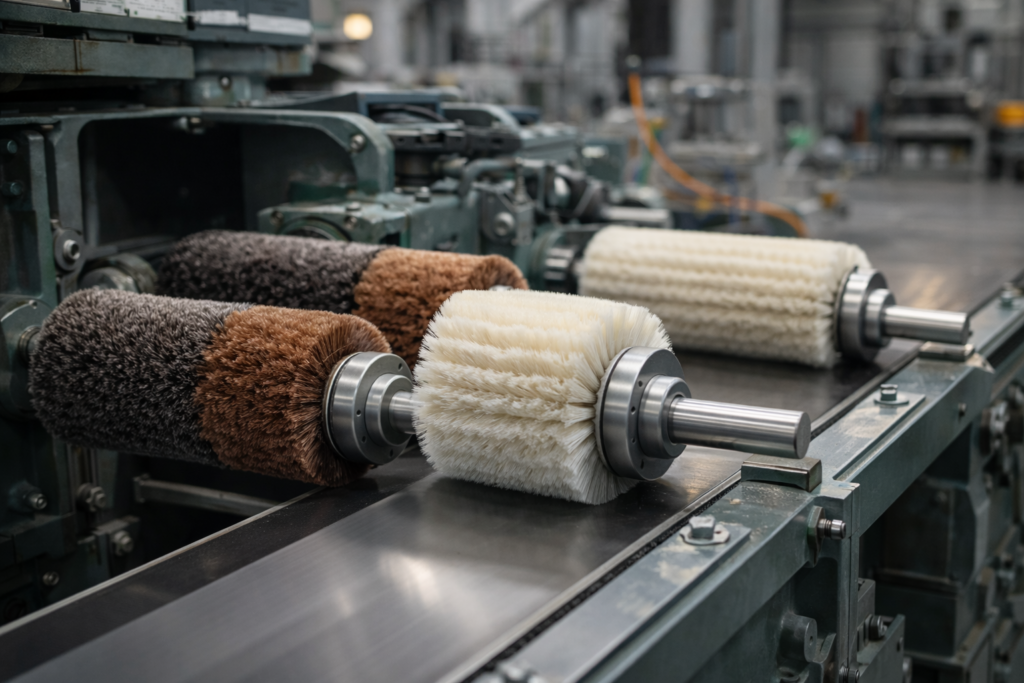
India’s manufacturing sector is moving steadily towards automation precision engineering and higher productivity benchmarks. Machines today operate at greater speeds with tighter tolerances and minimal margins for error. In this environment, even supporting components such as industrial brushes have a direct impact on operational efficiency. For industrial brushes manufacturers in India, industrial brush manufacturers in India and for end users alike, brush maintenance is no longer a secondary activity but a key contributor to machine reliability and output consistency.
A well-planned brush maintenance schedule supports smoother operations, longer equipment life and reduced downtime. When managed correctly, it becomes a practical tool for improving overall machine efficiency across sectors such as automotive, textiles, food processing, engineering and infrastructure manufacturing.
Understanding the Relationship Between Brushes and Machine Performance
Industrial brushes interact directly with machine surfaces, products and moving parts. They clean, deburr, convey, polish, seal or guide materials during production. Over time, brush filaments wear, bend or accumulate debris. When this wear goes unchecked, machines compensate by drawing more power, slowing down or producing inconsistent results.
Regular maintenance ensures that brushes continue to perform their intended function without placing unnecessary strain on motors, bearings and drive systems. This balance between brush condition and machine load is essential for maintaining stable performance.
Why Brush Maintenance Influences Efficiency
Machine efficiency depends on three basic factors: availability, performance and quality. Poor brush condition affects all three. A worn brush may cause uneven cleaning leading to rework. Excessive pressure from damaged filaments can slow cycle times. Unexpected brush failure can stop production altogether.
A structured maintenance schedule helps prevent these issues by identifying wear early and allowing planned intervention rather than emergency replacement. This reduces downtime and helps machines operate closer to their designed capacity.
Moving Beyond Reactive Maintenance
Many facilities still replace brushes only after visible failure. While this approach may appear cost effective in the short term, it often leads to higher long-term losses. Sudden brush failure can damage workpieces, contaminate products or interrupt automated lines.
A preventive approach based on regular inspection, cleaning and timely replacement allows brushes to be used efficiently without risking machine health. This shift from reactive to planned maintenance is particularly important in high volume Indian manufacturing environments.
Daily Checks That Make a Difference
Simple daily checks carried out by machine operators can significantly improve brush performance. Visual inspection helps identify bent, broken or clogged filaments before they affect output. Removing accumulated dust fibres or residue prevents heat build-up and uneven pressure.
Operators should also observe changes in surface finish, noise or vibration. These early indicators often point to brush wear rather than machine faults. Addressing them promptly avoids unnecessary troubleshooting and downtime.
Weekly Maintenance for Consistent Operation
Weekly maintenance focuses on deeper cleaning and mechanical alignment. Brushes used in oily, wet or dusty environments benefit from controlled cleaning using approved methods. Excessive chemical exposure should be avoided as it may weaken synthetic filaments.
Checking brush pressure and alignment during weekly maintenance ensures that filaments are working within their optimal range. Excess pressure accelerates wear and increases power consumption while insufficient contact reduces effectiveness.
Monthly Review and Planned Replacement
Monthly maintenance allows teams to assess overall brush condition and plan replacements without disrupting production. Measuring filament length, checking balance and reviewing wear patterns help determine remaining service life.
Rotating brushes where possible promotes even wear especially in wide contact applications. Planned replacement based on condition rather than failure improves predictability and supports smoother production scheduling.
Adapting Maintenance to Indian Operating Conditions
Indian manufacturing environments present unique challenges. High humidity. dust. temperature variation and continuous operation cycles all influence brush wear. In textile units. moisture can affect filament stiffness. In metalworking. dust and swarf can clog brush packs. In food processing. hygiene requirements demand frequent cleaning.
Maintenance schedules must account for these conditions rather than follow generic timelines. Tailoring inspection frequency and cleaning methods to local environments improves brush performance and extends usable life.
Material Selection and Maintenance Compatibility
The effectiveness of any maintenance schedule depends on using brushes suited to the application. Different filament materials respond differently to heat, chemicals, moisture and abrasion. Maintenance teams should understand these characteristics to avoid damage during cleaning or adjustment.
Working closely with experienced brush manufacturers allows users to align maintenance practices with brush design. This collaboration supports consistent performance and reduces unnecessary replacements.
The Role of Documentation and Training
Clear maintenance procedures supported by simple documentation improve consistency across shifts and teams. Training operators and technicians to recognise early signs of wear builds accountability and reduces dependency on reactive repairs.
Over time, this structured approach improves machine availability and supports predictable output which is increasingly important in modern supply chains.
Conclusion
Improving machine efficiency does not always require new equipment or complex upgrades. In many cases, it begins with better care of existing components. Industrial brushes play a quiet but essential role in keeping machines running smoothly and efficiently.
A well-designed brush maintenance schedule supports consistent performance, reduces downtime and protects equipment investment. For Indian manufacturers operating in demanding environments, this approach offers a practical and cost-effective way to enhance productivity. With the right maintenance discipline, industrial brushes continue to support reliable manufacturing outcomes across a wide range of applications.