
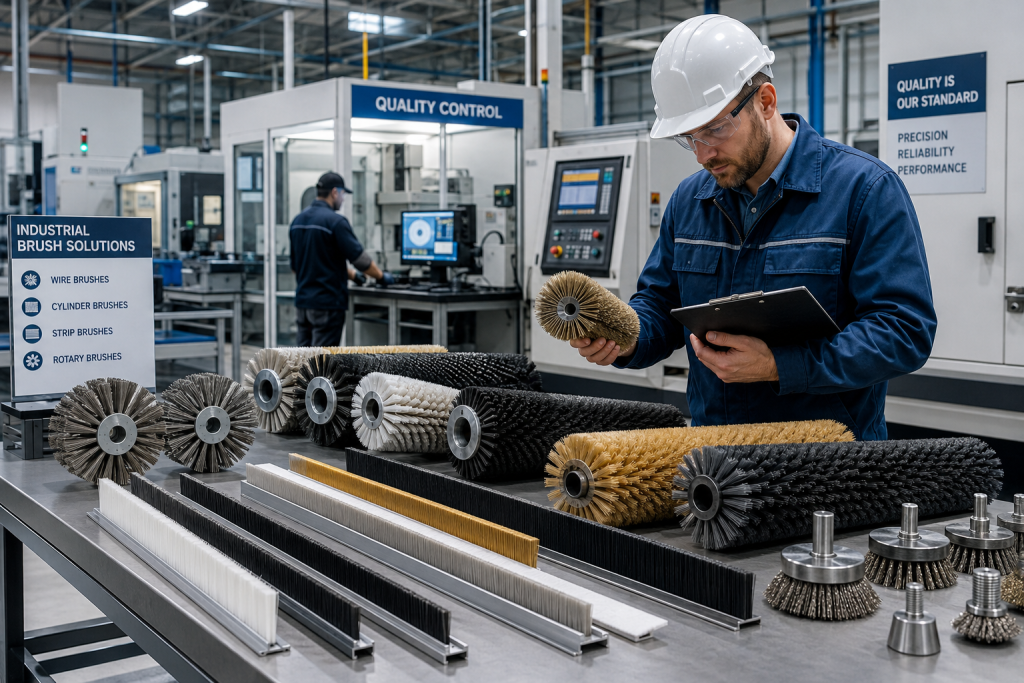
Placing a large industrial brush order without proper due diligence can lead to costly delays, quality issues and operational disruptions. Procurement teams and plant engineers often face significant challenges when partnering with suppliers who lack the capacity, expertise or reliability required for high-volume orders. This comprehensive guide outlines the critical factors you must verify to ensure successful partnership with your industrial brush supplier and protect your operational continuity.
1. Manufacturing Capabilities and Quality Standards
Before committing to a large order, thoroughly assess your supplier’s manufacturing infrastructure and quality management systems. The scale and complexity of industrial brush production require sophisticated facilities and proven processes to deliver consistent results.
Production Capacity Assessment
Evaluate your supplier’s annual production volumes and ability to scale operations for your specific requirements. Request detailed information about their manufacturing floor space, equipment capacity and workforce capabilities. A reliable industrial brush supplier should demonstrate the ability to handle surge orders without compromising quality or delivery timelines. Consider whether they have dedicated production lines for different brush types and the flexibility to accommodate custom specifications at scale.
Quality Certification Requirements
Confirm that your supplier maintains relevant ISO certifications and robust quality management systems. Look for certifications such as ISO 9001 for quality management and ISO 14001 for environmental management systems. These certifications indicate systematic approaches to quality control and continuous improvement. Review their quality control processes, including incoming material inspection, in-process monitoring and final product testing procedures.
Technology Integration Capabilities
Assess your supplier’s investment in advanced manufacturing technologies and their ability to integrate innovative features. Modern industrial applications increasingly require sensor-enabled brush capabilities and smart manufacturing solutions. Evaluate whether your supplier can incorporate advanced materials and technologies that enhance brush performance and provide real-time monitoring capabilities for predictive maintenance applications.
2. Lead Times and Delivery Commitments
Understanding realistic lead times and delivery capabilities is crucial for maintaining your production schedules and meeting customer commitments. Supply chain disruptions can significantly impact large orders, making supplier reliability a critical evaluation factor.
Standard vs. Custom Order Timelines
Establish clear expectations for both standard and customised product lead times. Large volume orders often require extended production timelines, particularly when custom specifications are involved. Request historical data on similar order fulfilment and understand the factors that could extend delivery schedules. Ensure your supplier provides realistic timelines rather than optimistic projections that may lead to disappointment.
Supply Chain Reliability Factors
Review your supplier’s supply chain resilience and backup plans for managing disruptions. Understand their raw material sourcing strategies, inventory management practices and relationships with key component suppliers. A robust industrial brush supplier should maintain strategic inventory levels and have established relationships with multiple material suppliers to mitigate supply chain risks.
3. Material Specifications and Sustainability Credentials
Material quality and sustainability considerations are increasingly important for procurement teams managing large industrial brush orders. Environmental compliance and sustainable sourcing practices can significantly impact your organisation’s sustainability goals and regulatory compliance.
Filament Material Options
Verify the availability of advanced filament materials including recycled and bio-based options that meet your performance requirements. Review material durability specifications, temperature resistance, chemical compatibility and wear characteristics. Your supplier should provide comprehensive material data sheets and performance testing results for different filament options. Understanding material limitations and optimal application conditions ensures proper brush selection for your specific industrial requirements.
Sustainable Manufacturing Practices
Assess your supplier’s commitment to sustainable manufacturing practices and environmental responsibility. Companies like Aviva Brushes are leading the industry by incorporating recycled and bio-based filaments into their production processes whilst maintaining superior performance standards. Review their waste reduction initiatives, energy efficiency programmes and sustainable sourcing policies.
Compliance with Environmental Standards
Confirm compliance with relevant environmental regulations in both the manufacturing location and your operational regions. This includes understanding restricted substance regulations, waste disposal compliance and environmental impact assessments. Ensure your supplier maintains appropriate environmental certifications and regularly updates their compliance procedures.
4. Technical Support and Application Expertise
Technical expertise and application-specific knowledge are essential for successful industrial brush implementation. Large orders often involve complex requirements that demand specialised engineering support and customisation capabilities.
Engineering Consultation Services
Evaluate your supplier’s technical support capabilities for complex industrial applications. This includes access to experienced engineers who understand your specific industry requirements and can provide guidance on brush selection, installation and optimisation. Aviva Brushes exemplifies this approach by offering comprehensive engineering consultation services to ensure optimal brush performance in demanding industrial environments.
Application-Specific Customisation
Review your supplier’s experience with similar industrial applications and their ability to provide customised solutions. This includes modifications to brush dimensions, filament materials, mounting configurations and specialised features. Assess their prototyping capabilities and willingness to develop custom solutions that address your specific operational challenges.
5. Pricing Structure and Cost Efficiency
Understanding the complete cost structure for large orders enables better budgeting and value assessment. Beyond unit pricing, consider the total cost of ownership and long-term value proposition.
Volume Pricing Models
Understand volume discount structures and pricing tiers for large orders. Request detailed pricing breakdowns that include manufacturing costs, materials, customisation charges and any additional fees. Compare pricing models and ensure transparency in cost calculations. Evaluate whether the supplier offers flexible pricing arrangements for long-term contracts or repeat orders.
Total Cost of Ownership Considerations
Calculate the complete cost including shipping, handling, insurance and any import duties or taxes. Consider the impact of brush longevity and performance on your operational costs. Higher-quality brushes may justify premium pricing through extended service life and reduced maintenance requirements.
Currency and Payment Terms
Review payment terms, currency options and financial arrangements that align with your procurement policies. Understand currency fluctuation risks and available hedging options for large orders. Establish clear payment milestones and delivery terms that protect your interests whilst supporting supplier cash flow requirements.
6. After-Sales Support and Warranty Coverage
Comprehensive after-sales support and warranty coverage provide essential protection for large industrial brush investments. These services demonstrate supplier confidence in their products and commitment to long-term customer relationships.
Warranty Terms and Coverage
Confirm warranty coverage specifics for large volume orders, including duration, coverage scope and replacement procedures. Understand warranty limitations and exclusions, particularly for customised products or demanding applications. Ensure warranty terms are clearly documented and enforceable across international boundaries if applicable.
Technical Support Availability
Verify the availability of ongoing technical support post-delivery, including troubleshooting assistance, application guidance and performance optimisation recommendations. Consider time zone differences and language requirements for international suppliers. Establish clear communication channels and response time expectations for technical support requests.
Replacement and Maintenance Services
Understand procedures for managing defective products, warranty claims and routine maintenance support. Review the supplier’s approach to continuous improvement and their willingness to address performance issues or application challenges that emerge during product use.
7. Supplier Financial Stability and Business Continuity
Assessing supplier financial health and business continuity planning protects your long-term supply security. Large orders create significant dependencies that require stable, reliable supplier relationships.
Financial Health Assessment
Evaluate your supplier’s financial stability through available financial reports, credit ratings and industry reputation. Consider their ability to invest in capacity expansion, technology upgrades and quality improvements. Strong financial health indicates the supplier’s capability to support long-term partnerships and weather economic challenges.
Business Continuity Planning
Review business continuity plans and risk mitigation strategies for potential disruptions. This includes understanding backup manufacturing facilities, alternative supply sources and emergency response procedures. Assess their capacity for future growth and innovation to ensure they can evolve with your changing requirements.
Long-term Partnership Viability
Consider the supplier’s strategic direction and their commitment to your industry sector. Evaluate their investment in research and development, new product development and market expansion plans. A forward-thinking supplier like Aviva Brushes demonstrates commitment through continuous innovation in sustainable materials and advanced brush technologies.
Implementation Checklist for Procurement Teams
Successful supplier evaluation requires systematic approaches and clear documentation standards. Establishing comprehensive evaluation frameworks ensures consistent assessment across different suppliers and order types.
Pre-Order Verification Steps
Create a systematic evaluation framework that addresses all critical supplier capabilities and requirements. Develop standardised assessment criteria and scoring systems for objective supplier comparisons. Establish clear documentation requirements and approval processes that involve relevant stakeholders including engineering, quality assurance and finance teams.
Documentation Requirements
Develop performance metrics for ongoing supplier evaluation and regular review schedules for large supplier relationships. Maintain comprehensive records of supplier assessments, performance data, and improvement initiatives. Establish regular communication protocols and performance review meetings to ensure continuous improvement and relationship development.
Consider developing supplier scorecards that track key performance indicators including delivery performance, quality metrics, technical support responsiveness and innovation contributions. These tools provide objective data for supplier management decisions and continuous improvement initiatives.
Conclusion
Thorough supplier verification before placing large industrial brush orders protects your investment and ensures operational continuity. The seven critical areas outlined in this guide provide a comprehensive framework for evaluating potential suppliers and establishing successful long-term partnerships. Partner with an experienced industrial brush supplier who demonstrates proven capabilities, sustainable practices and commitment to long-term success.
By implementing systematic evaluation processes and maintaining clear performance expectations, procurement teams can minimise risks whilst maximising value from their industrial brush investments. Remember that the lowest initial price rarely represents the best value when total cost of ownership and operational reliability are considered.
Successful partnerships require ongoing communication, performance monitoring, and continuous improvement initiatives that benefit both parties. Take the time to thoroughly evaluate potential suppliers using these guidelines, and establish relationships that support your operational excellence and sustainability goals for years to come.