
Industrial brushes sit at the heart of many Indian factories, from automotive and textile units to food processing and infrastructure projects. As production demands rise and sustainability expectations grow, the question of whether to replace or refurbish brushes becomes increasingly important. For leading brush manufacturers in India and specialist industrial brush manufacturers, retufting has become a practical way to extend brush life, manage costs and reduce waste in a structured, repeatable manner.
What is industrial brush retufting?
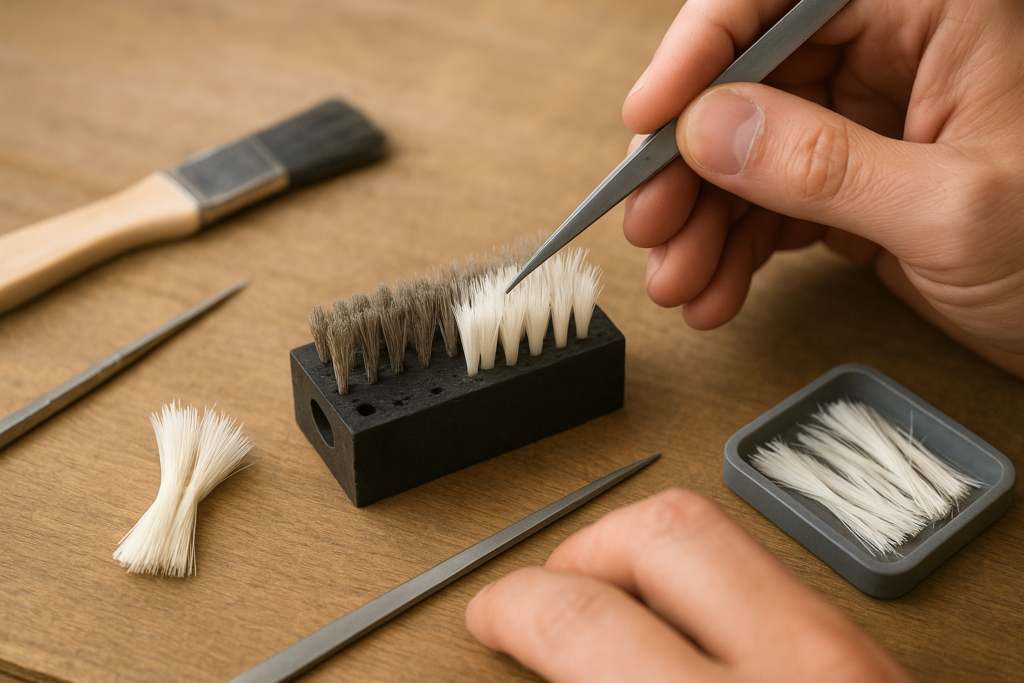
Brush retufting is the renewal of a worn industrial brush by replacing only the bristles while retaining the original metal or polymer core. The core is cleaned, inspected and prepared for new filaments that match the required performance.
This method avoids discarding the entire brush and is especially useful for large roller brushes, custom cylindrical brushes and other critical process brushes where the core is robust, precisely engineered and costly to manufacture again.
Why retufting matters to Indian industry?
Indian manufacturing faces increasing demands for higher output, strict quality control and measurable sustainability performance, while procurement teams must manage costs carefully. Retufting helps meet these objectives by reducing industrial waste, supporting circular economy practices and lowering the overall material footprint of a plant.
It transforms a high value brush core into a reusable asset that can be serviced in a planned maintenance cycle rather than replaced abruptly when wear becomes critical. For sectors such as textiles, metals, food processing and pharmaceuticals, this shift towards refurbishment significantly improves long term operating efficiency and cost control.
How the retufting process works?
Retufting is not a simple cleaning service. It is a precise manufacturing process carried out in clear, controlled stages.
First, the used brush is inspected and the core is cleaned to identify any cracks, deformation or corrosion. All dimensions, mounting details and performance requirements are carefully recorded.
Second, the worn bristles are removed without damaging the core. This may involve mechanical extraction, controlled heat or chemical softening, depending on the original construction.
Third, new synthetic or metallic filaments are selected and inserted to match or enhance the original specification.
Finally, the retufted brush is trimmed, finished and dynamically balanced where required to ensure smooth, reliable performance in high speed applications.
Cost comparison: retufting versus complete replacement
From a financial point of view, retufting changes the structure of brush expenditure, by renewing only the bristles rather than replacing the entire brush. A new brush includes the cost of the core, design work and machining, whereas retufting preserves the original core and requires payment only for new filaments and service.
This allows the core investment to be used across multiple cycles, reducing the total cost of ownership compared with repeated full replacements. Retufting also offers shorter lead times than ordering new custom brushes, helping to minimise downtime and avoid the indirect costs of urgent procurement.
Operational benefits for Indian plants
For Indian plants running continuous operations, unplanned downtime is a significant concern. Retufting supports predictable maintenance by allowing cores to be removed during scheduled shutdowns, refurbished and returned to service with minimal disruption.
The process also enables performance improvements. When a sound core is retufted, it may be upgraded from traditional wire to abrasive nylon or to chemical resistant synthetic filaments, improving consistency, reducing noise and enhancing operator safety in metal finishing and other demanding applications.
Retufted brushes retain their original design, allowing smooth integration into existing machinery including automated conveyor systems without major adjustment.
Sustainability and compliance advantages
Environmental compliance is increasingly important for the Indian industry. Discarded brush cores made from steel, aluminium or heavy duty plastics are difficult to recycle and may remain in landfill for long periods. Retufting reduces this burden by keeping cores in use for far longer.
This supports corporate sustainability goals, particularly for companies reporting on resource efficiency, waste reduction and responsible sourcing. For export focused manufacturers, demonstrating circular economy practices at shop floor level can also strengthen competitiveness.
Retufting services located near major industrial centres further reduce transport distances and related emissions compared with importing new brushes.
When retufting is suitable and when it is not
Retufting is suitable when the brush core is structurally sound, the mountings are intact and the original design continues to meet process needs. This is often the case in conveyor cleaning, textile handling, surface preparation and food grade applications.
Replacement is preferable when the core is bent, cracked, corroded or out of balance. It is also necessary when machinery has been upgraded and a different brush specification is required.
A technical assessment by a specialist manufacturer ensures that the correct decision is made, balancing quality, safety and cost effectively.
Aviva Brushes and retufting services
As a specialist producer of technical and industrial brushes based in Coimbatore, Aviva Brushes supports Indian industries with both new brush manufacturing and professional retufting and reworking services. The company focuses on engineered solutions for sectors such as automotive, metals, textiles, food processing and pharmaceuticals, combining custom design capabilities with an emphasis on wear resistance and durability.
By working with an ISO certified partner that understands local machinery, material choices and process conditions, maintenance teams gain a reliable route to extend brush life without compromising on performance or safety.
Conclusion: a strategic maintenance choice for Indian industry
Brush retufting has evolved into a strategic maintenance practice that supports resource efficiency, predictable servicing and responsible waste management.
For Indian manufacturers aiming to remain competitive and meet sustainability expectations, retufting provides a practical route forward. Viewing brush cores as long term assets allows plants to stabilise budgets, limit downtime and adopt a more circular model of production.
With experienced partners such as Aviva Brushes offering inspection, retufting and quality control in one place, industrial users across India can integrate this approach confidently into their maintenance and procurement planning.